How to Repot an Orchid (Phalaenopsis): Step by Step to New Blooms
Repotting an orchid is an absolutely crucial step for its long-term health, but many home growers are downright terrified of it. They're afraid they'll irreversibly kill this delicate exotic beauty. The opposite is actually true! If you follow the right process, your orchid will positively spring back to life and reward you with a new, abundant flood of blooms.
When is the right time? As a general rule, orchids should be repotted roughly once every 2 to 3 years.
The Golden Rule of Repotting: When to Definitely Not Start
A tip from our florist Andrea (a houseplant specialist): "The most common mistake I see customers make is bad timing. Remember the golden rule: never repot an orchid while it's blooming! The plant would suffer a huge shock and drop its buds immediately. Wait until it finishes flowering and starts growing new leaves. And why repot at all? Bark substrate breaks down over time into fine dust that literally suffocates the roots and holds too much moisture. That puts you at risk of rapid rot."
What Will You Need? (Preparation Is Everything)
This is where 90% of beginners make a fatal mistake. An orchid isn't a geranium, it doesn't need regular soil! In nature it grows attached to tree bark, so its roots absolutely need to breathe.
-
A special substrate: A coarse mix of pine bark, charcoal, and moss is ideal. Never use regular potting soil.
-
A clear pot: Orchid roots (e.g. of the genus Phalaenopsis) carry out photosynthesis, so they need plenty of light. Choose a pot only 1–2 cm larger than the original.
-
Sharp scissors or a knife: For removing dead and rotten roots.
-
Natural disinfectant: Rubbing alcohol to clean your scissors, and ground cinnamon (or crushed activated charcoal) to dust onto plant wounds.

The Orchid Repotting Process: Step by Step
1. Removing and Cleaning the Roots
The day before you plan to repot, water the orchid lightly — its roots will be much more flexible and less likely to break. Carefully remove the plant from its pot (if it's stuck firmly, it's better to carefully cut away the plastic pot instead). Gently shake off all the old substrate. You can rinse the roots with lukewarm water so you can see exactly what condition they're in.
2. The "Surgical" Step
Now you need to be ruthless. Carefully examine the entire root system:
Healthy roots: They're firm, hard, plump to the touch, and are silvery or green in color.
Dead roots: They're brown, hollow, papery, or on the other hand soft and mushy. Uncompromisingly cut off any dead or rotten roots with disinfected scissors, cutting all the way back to living tissue.
Tip: Dust the cuts with ground cinnamon right away. It works as an excellent natural disinfectant and speeds up safe healing.
3. Actually Planting It
Put a small layer of bark at the bottom of the new clear pot. Insert the orchid and gradually add fresh substrate around the roots. Don't pack it down! The substrate needs to stay as airy as possible. Just gently tap the pot on the table so the bark naturally settles into the gaps between the roots. Don't try to force any aerial roots that have grown upward and out of the pot back inside — let them stick out, it's perfectly natural for the plant.

4. Aftercare (Watch Out for Watering!)
This is where the second most common mistake happens. If you trimmed any roots during repotting, don't water the orchid at all for about 5–7 days. The wounds on the roots need to close up safely first. Watering too soon would cause immediate infection and rot. You can only very gently mist the leaves (being careful that water doesn't sit and pool in the "crown" of the leaves). (If you didn't damage the roots at all, you can water lightly, but keep the substrate only lightly moist.)
Would You Rather Have a New Orchid? Choose One From Us
Don't have time to repot, worried you'll damage the plant, or simply want to grow your collection? Beautiful blooming orchids are our specialty.
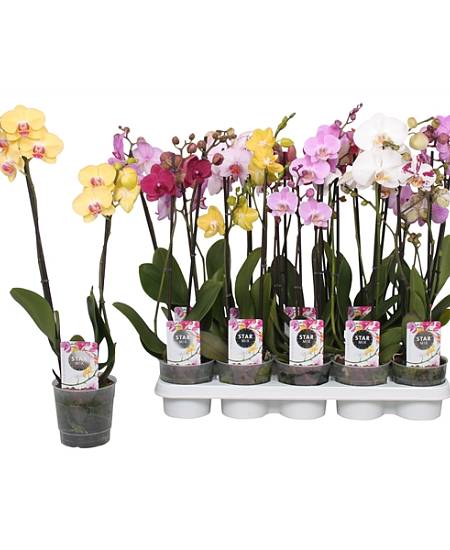
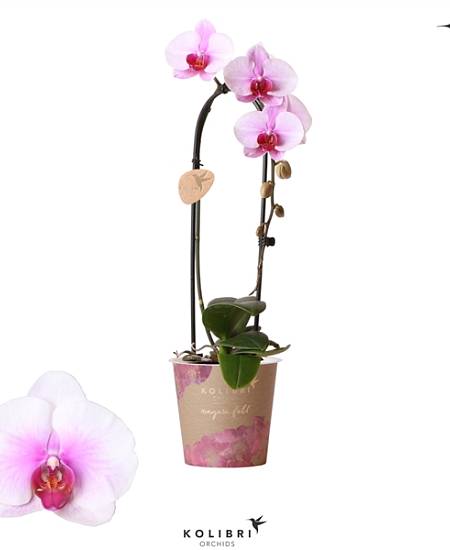
We offer them in many luxurious colors and will deliver them safely to your home or office. A huge hit for modern interiors, for example, is the smaller and remarkably elegant Phalaenopsis Kolibri. Pick your blooming joy today:
Blooming Inspiration (If You're Not Up for Repotting):
(Choose a fresh, new orchid, which we'll deliver right to your home)
Frequently Asked Questions About Repotting an Orchid
How often should an orchid be repotted?
Orchids are repotted roughly once every 2 to 3 years. Bark substrate gradually breaks down into fine dust that chokes the roots and holds too much moisture, which risks quick rot.
When should I not repot an orchid?
Never repot an orchid while it is in bloom. According to florist Andrea, the plant would suffer a huge shock and the buds would drop at once. Wait until it has finished flowering and starts producing new leaves.
Which substrate and pot should I use for an orchid?
An orchid does not need ordinary soil. The ideal is a coarse mix of pine bark, charcoal and moss, never regular garden substrate. Choose a transparent pot only 1–2 cm larger than the original, because the roots need light.
What should I do with the roots when repotting?
Healthy roots are firm, hard and silvery or green; dead ones are brown, hollow, papery or, on the contrary, soft and mushy. Cut off dead and rotten roots with disinfected scissors right back to the "living" part and dust the cuts immediately with ground cinnamon.
When can I water an orchid after repotting?
If you trimmed the roots, do not water at all for about 5–7 days so the wounds can close. You can only mist the leaves gently, making sure water does not stay in the "heart" of the plant. If you did not damage the roots, you can water lightly.
Team KvětinyExpres.cz