Spring Crocus (Crocus vernus) – A Messenger of Spring
The spring crocus (Crocus vernus) is one of the first spring flowers to brighten gardens, meadows, and city parks after winter. This beautiful bloom belongs to the iris family (Iridaceae) and is loved not just for its beauty, but also for how easy it is to grow.
Appearance and Characteristics
- Height: 10–15 cm
- Flowers: Bell- to cup-shaped, in white, yellow, purple, lilac, or striped patterns
- Leaves: Narrow, with a characteristic white stripe down the middle
- Corm: An underground corm (bulb-like structure) that allows it to survive winter
.jpg)
When Does the Spring Crocus Bloom?
- Flowering period: February–April
- Crocuses are among the very earliest spring flowers, often appearing while the last patches of snow are still on the ground.
- They're a key source of pollen for bees searching for their first food after winter.
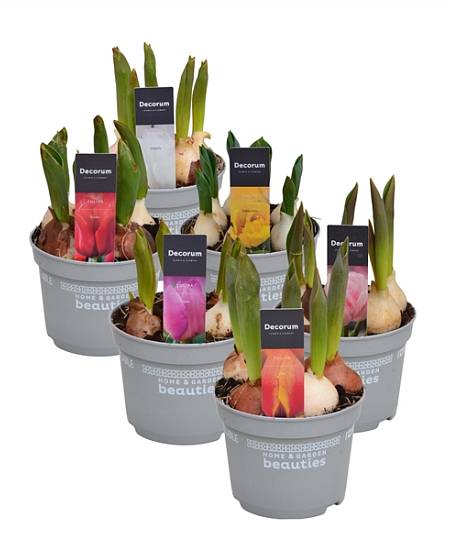
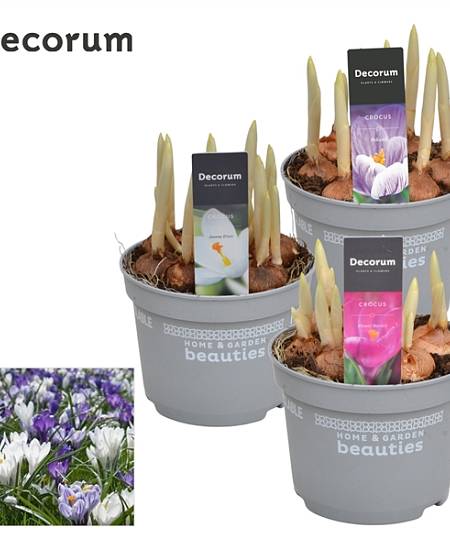
Crocus and Other Spring Bulbs

How to Grow Crocuses
Crocus corms are planted in autumn, ideally between September and November, before the soil freezes.
- Planting depth: Plant the corm about 7–10 cm deep, pointed end up.
- Spacing: 5–8 cm apart — the denser the planting, the richer the carpet of blooms in spring.
- Soil: Well-draining, humus-rich, slightly moist — crocuses can't tolerate permanently wet soil, in which the corms rot easily.
- Location: A sunny to partially shaded spot. Since crocuses bloom early in spring, before trees have leafed out, they also do beautifully under deciduous trees or shrubs.
- Watering: Low-maintenance; natural rainfall is enough during the growing season.
Care After Blooming
This is the point most people underestimate, and then their crocuses stop blooming:
- Let the leaves wither naturally: Even once there's nothing left to admire, don't cut off the leaves after flowering. The corm draws energy from them for next spring.
- Don't mow the lawn too early: If you have crocuses planted in your lawn, hold off mowing until the leaves have completely turned yellow (roughly 6 weeks after blooming).
Crocuses can be grown in lawns, rock gardens, pots, and under trees, where with a little patience they'll form a dense, colorful carpet on their own — just let the seed pods mature and self-seed.
The Most Common Mistakes When Growing Crocuses
- Soil that's too wet: The most common cause of corm rot.
- Mowing the lawn too early: Stops the corm from maturing, and it'll bloom less, or not at all, next year.
- Rodents: Mice and voles love to dig up crocus corms. Planting in a wire basket helps.
The Symbolism of Crocuses – The Flowers of Spring
- A symbol of spring and new beginnings — Crocuses are among the first messengers of spring, and are often associated with renewal, new opportunities, and hope.
- Loyalty and perseverance — Despite being delicate, they can bloom even in harsh conditions, symbolizing strength and resilience.
- Joy and happiness — Their vivid colors bring the first optimism of spring to the garden.
In some cultures, crocuses are associated with love and romance; in Greece, they were even considered flowers of the gods.
Fun Facts About Crocuses
- The spring crocus is a relative of saffron crocus (Crocus sativus), whose dried stigmas are the well-known and very expensive spice, saffron.
- In the wild, crocuses are commonly found in the high-mountain regions of Europe, such as the Alps or the Carpathians.
The spring crocus is therefore not just a beautiful flower, but also a symbol of new beginnings and the arrival of warmer days.
Team KvětinyExpres.cz
