Author: florist Monika, KvětinyExpres.cz · Updated: August 2026
The snake plant, botanically Sansevieria, is one of the toughest houseplants in the world. It survives shade, dry air, and being forgotten for weeks at a time — all while looking like a living sculpture.
Where Does the Name "Mother-in-Law's Tongue" Come From?
The plant got its common nickname from its long, sharply pointed, indestructible leaves — hence the English names mother-in-law's tongue and snake plant. Botanically it belongs to the genus Sansevieria, which includes more than 70 species — the most common is Sansevieria laurentii, recognizable by the yellow border on its leaves.
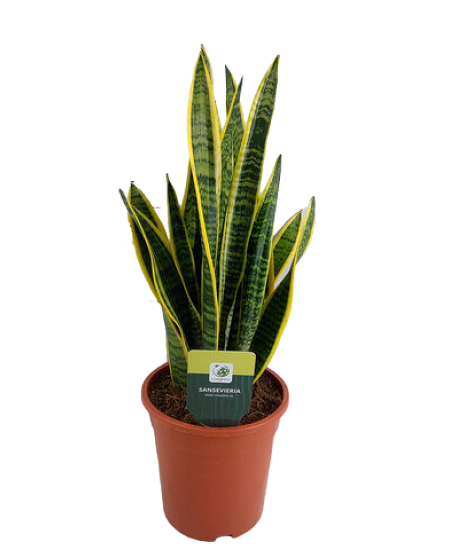
How to Care for a Snake Plant
Tip from florist Monika
"The snake plant has exactly one weakness — overwatering. It's a succulent, so it stores water in its leaves. My tip? Water it only once you remember to. In winter, once a month is plenty. It's also one of the few plants that produces oxygen at night too, which makes it brilliant for a bedroom, for better sleep."
- Light: Tolerates deep shade as well as direct sun — grows best in diffused light.
- Watering: Minimal. Overwatering is the only thing that can kill it.
- Temperature: Normal room temperature; doesn't tolerate frost.
- Feeding: Once a month in spring and summer with a lightly diluted fertilizer.
What to Watch Out For
The snake plant is mildly toxic if ingested — for cats, dogs, and children it can cause mouth irritation and stomach upset. We recommend keeping it out of reach of small children and pets that like to nibble on leaves. With normal handling and no ingestion, the plant is entirely safe — in fact, it's one of the few plants that actively clean the air of formaldehyde and benzene.
Like this indestructible beauty? Order a snake plant and we'll deliver it to you warm and safe, whatever the weather outside.
The KvětinyExpres.cz team
Related: Peace Lily (Spathiphyllum): Care, Watering & Why It Won't Bloom.
