Latin plant names can seem like a mysterious code meant only for botanists and pharmacists. You might be thinking: "Why can't we just say chamomile or rose?"
The reason is simple – precision. While common names vary from region to region (not to mention across languages), Latin is international. It ensures that whether you order Rosa canina in Japan, England, or here at home, you'll always get exactly the same dog rose.
In this article, we'll teach you the basics of botanical "grammar," so you can navigate these names like a professional.
Examples of Flowers Where the Exact Name Is Key

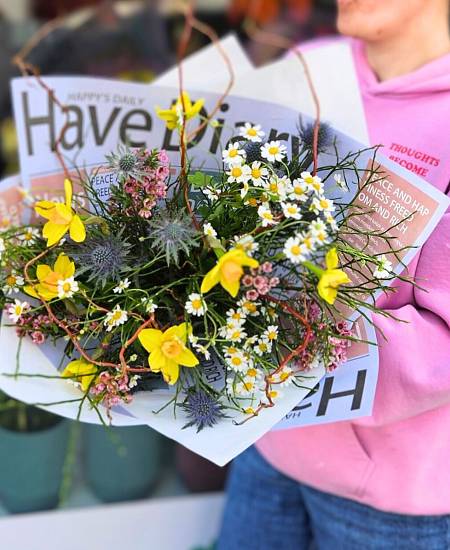

The Basic Rule: Two Names (Like a First and Last Name)
The system we still use today was introduced in the 18th century by the Swedish naturalist Carl Linnaeus. Every plant has a two-word name:
-
The genus name: Always written with a capital letter. It corresponds to a surname (defining the broader family).
-
The species name: Always written with a lowercase letter. It identifies the specific plant.
Example: Matricaria chamomilla (German chamomile)
Matricaria = the genus (chamomile)
chamomilla = the species (German/true)
Formal Notation: Italics Are a Must
Notice how we've been writing these names in slanted text above? That's no accident.
-
The rule: Latin names are always written in italics in printed text.
-
The exception: If you're writing the name by hand (for example, on a plant-nursery label), underlining replaces italics.

Advanced Botany: What Do Those Abbreviations Mean?
When buying plants or seeds, you'll often come across odd abbreviations after the Latin name. What do they mean?
1. Cultivar (cv. or '...')
This is the most important one for floristry. A cultivar (from "cultivated variety") is a variety bred by humans. It has specific traits – bloom color, fragrance, or hardiness.
-
Notation: Written upright (not in italics) and enclosed in single quotation marks.
-
Example: Rosa 'Red Naomi' (a famous large-flowered red rose variety).
2. Hybrid (x)
If a plant arose from crossing two species, it's marked in the name with a multiplication sign (x).
-
Example: Mentha x piperita (peppermint – a hybrid of water mint and spearmint).
3. Subspecies (subsp.) and Variety (var.)
These denote minor variations found in nature (e.g., a different leaf shape in a different geographic region).
-
subsp. (subspecies) = a subspecies
-
var. (varietas) = a variety
-
Example: Galanthus nivalis subsp. reginae-olgae (a specific snowdrop species).
4. Unidentified Species (sp.)
If a botanist knows it's a chamomile but isn't sure exactly which one, they use the abbreviation sp. (species).
-
Example: Matricaria sp. (some species of chamomile).
A Summary to Remember
Want to write plant names correctly? Stick to these 3 points:
-
Write the Latin name in italics.
-
The first word (genus) gets a capital letter, the second (species) a lowercase one.
-
Put the cultivar name in single quotation marks, and don't italicize it.
Why Learn This?
You might be wondering what good this will do you. Knowing the exact names can help, for example, with:
-
Allergies: You'll know exactly which species to avoid.
-
Pet care: You'll easily be able to check whether a particular Lilium (lily) is toxic to your cat (spoiler: most are).
-
Shopping: At a garden center, you'll buy exactly the cultivar you saw in a magazine, not just "some similar-looking flower."
At Květiny Expres, we pride ourselves on precision. Whether you order Rosa, Tulipa, or Helianthus (sunflower), you'll always get fresh flowers of the highest quality.
Team KvětinyExpres.cz
